



P2Y Receptor
P2Y receptors are a class of G protein-coupled receptors (GPCRs) activated by extracellular nucleotides (ATP, UTP, and UDP). There are eight mammalian P2Y receptor subtypes (P2Y1, P2Y2, P2Y4, P2Y6, P2Y11, P2Y12, P2Y13, and P2Y14). The P2Y receptors are expressed in various cell types and play important roles in physiology and pathophysiology including inflammatory responses and neuropathic pain.
The P2Y family can be further divided into a subfamily of five P2Y1, P2Y2, P2Y4, P2Y6, and P2Y11Rs (“P2Y1-like”) that stimulate phospholipase C (PLC) through Gq protein and a second subfamily of P2Y12, P2Y13, and P2Y14Rs (“P2Y12-like”) that inhibit adenylate cyclase through Gi protein. Other effector pathways have been documented, such as coupling of the P2Y11R to Gs as well as to Gq in some cells to induce stimulation of cyclic AMP production.
P2Y Receptor Isoform Specific Products
All Product Categories
-
P2Y Receptor Inhibitors
(58)
View all products
-
P2Y Receptor Agonists
(50)
View all products
-
P2Y Receptor Antagonists
(85)
View all products
-
P2Y Receptor Activators
(11)
View all products
-
P2Y Receptor Modulators
(4)
View all products
-
P2Y Receptor Controls
(3)
View all products
-
P2Y Receptor Ligands
(3)
View all products
-
P2Y Receptor Related Products (229)
Related Products (229)

-
Antibodies (2)
-
P2Y Receptor Isoform Comparison
-
(Rac)-Clopidogrel hydrogen-d9 sulfate
 0 ImagesCat. No.: HY-107867S1(Rac)-Clopidogrel hydrogen-d9 sulfate is the deuterium labeled (±)-Clopidogrel (bisulfate) (HY-107867). (±)-Clopidogrel bisulfate is a platelet P2Y12 receptor inhibitor and an adenosine diphosphate (ADP) receptor antagonist. (±)-Clopidogrel bisulfate inhibits the binding of ADP to its receptors on the membranes of platelet cells, and blocks ADP-mediated activation of the glycoprotein GPIIb/IIIa complex. (±)-Clopidogrel bisulfate reduces vascular inflammation and angiotensin II induced-abdominal aortic aneurysm progression. (±)-Clopidogrel bisulfate has anti-inflammatory effects.
-
Clopidogrel thiolactone (Standard)
 0 ImagesCat. No.: HY-15876RCAS No.: 1147350-75-1Cyhalofop (Standard) is the analytical standard of Cyhalofop. This product is intended for research and analytical applications. Cyhalofop (Cyhalofop acid), the primary metabolite of Cyhalofop-butyl (HY-B0861) in susceptible grasses, is the herbicidally active metabolite. Cyhalofop-butyl is an aryloxyphenoxypropionate post-emergence herbicide widely used around the world in agriculture.
-
P2Y14R antagonist 4
 0 ImagesCat. No.: HY-173407CAS No.: 3081687-67-1
-
MRS2567
 0 ImagesCat. No.: HY-117572CAS No.: 15398-83-1MRS2567 is a P2Y receptor antagonist with the activity of inhibiting contraction of mouse mesenteric arteries. MRS2567 can inhibit the sustained contraction caused by UTP and UDP, and inhibit the Na+, K+, 2Cl- co-transport-dependent signaling pathway, thereby affecting the myogenic tone of mouse mesenteric arteries.
-
Uridine 5'-O-thiodiphosphate trisodium
 0 ImagesCat. No.: HY-137608ASynonyms: UDP-β-S trisodiumUridine 5'-O-thiodiphosphate trisodium (UDP-β-S trisodium) is a P2Y6 receptor agonist with an EC50 of 25 nM. Uridine 5'-O-thiodiphosphate trisodium resists degradation by extracellular nucleotidases and stimulates the accumulation of inositol phosphates. Uridine 5'-O-thiodiphosphate trisodium stimulates contractile responses in endothelium-denuded rat mesenteric arteries. As a mitogen, Uridine 5'-O-thiodiphosphate trisodium stimulates DNA synthesis, [3H] thymidine incorporation, protein synthesis, [3H]leucine incorporation, and increases the number of vascular smooth muscle cells. Uridine 5'-O-thiodiphosphate trisodium can be used in the research of cardiovascular diseases such as atherosclerosis.
-
YM-254891
 0 ImagesCat. No.: HY-N17826CAS No.: 726188-99-4
-
UMP-CP trisodium
 0 ImagesCat. No.: HY-137607AUMP-CP trisodium (Compound 3), a nucleotide, is a P2Y14 receptor agonist with an EC50 of 160 nM for P2Y14 receptor over the P2Y6 receptor. UDP trisodium can be used for pain, diabetes, cystic fibrosis and other pulmonary diseases research.
-
MRS2279
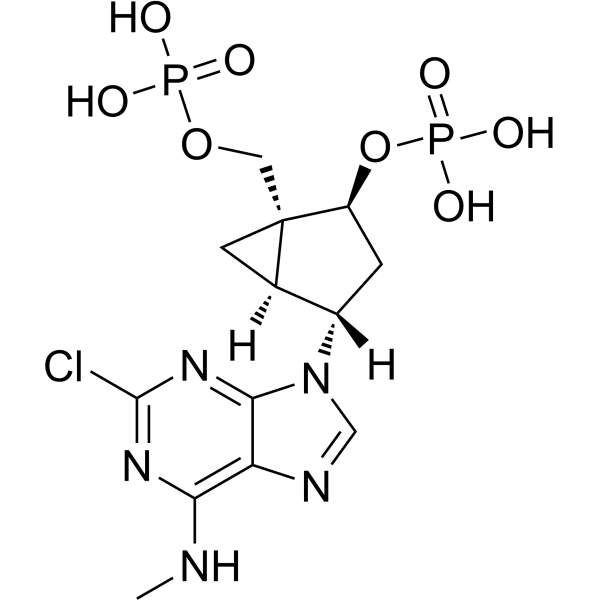 0 ImagesCat. No.: HY-108657CAS No.: 367909-40-8MRS2279 is a selective and high affinity P2Y1 receptor antagonist, with a Ki of 2.5 nM and an IC50 of 51.6 nM. MRS2279 competitively inhibits ADP-promoted platelet aggregation with an apparent affnity (pKB=8.05).
-
P2Y1 antagonist 2
 0 ImagesCat. No.: HY-174126P2Y1 antagonist 2 (Compound 19) is a P2Y1 receptor antagonist (IC50: 0.49 μM). P2Y1 antagonist 2 has significant antiplatelet aggregation activity and exerts its effects by inhibiting P2Y1 receptor. P2Y1 antagonist 2 can upregulate nuclear Nrf2 protein levels, exhibit neuroprotective effects, and resist oxidative stress damage. P2Y1 antagonist 2 can effectively reduce cerebral infarction area and improve neurobehavioral function, and can be used in the study of ischemic stroke.
-
AR-C67085
 0 ImagesCat. No.: HY-122048CAS No.: 164992-25-0Synonyms: AR-C67085MX; PSB 0413; FPL 67085AR-C67085 (PSB 0413; FPL 67085) is a potent platelet P2T receptor antagonist with an pIC50 value of 8.60. AR-C67085 inhibits ADP-induced platelet aggregation.
-
Sp-UTP-α-S
 0 ImagesCat. No.: HY-137612CAS No.: 71214-29-4Synonyms: Uridine 5'-O-1-thiotriphosphateSp-UTP-α-S (Uridine 5-0-1-thiotrirhosphate) is a P2Y2 and P2Y4 receptor activator. Sp-UTP-α-S can be used in cancer research.
-
P2Y1 antagonist 3
 0 ImagesCat. No.: HY-174127P2Y1 antagonist 3 (compound 36b) is a blood-brain barrier (BBB)-penetrant P2Y1 antagonist with an IC50 of 0.50 μM. P2Y1 antagonist 3 exhibits protective effects in a rat middle cerebral artery occlusion (MCAO) model and demonstrates neuroprotective activity against oxidative stress by upregulating nuclear Nrf2 protein levels.
-
Uridine 5'-diphosphate-15N2 dilithium
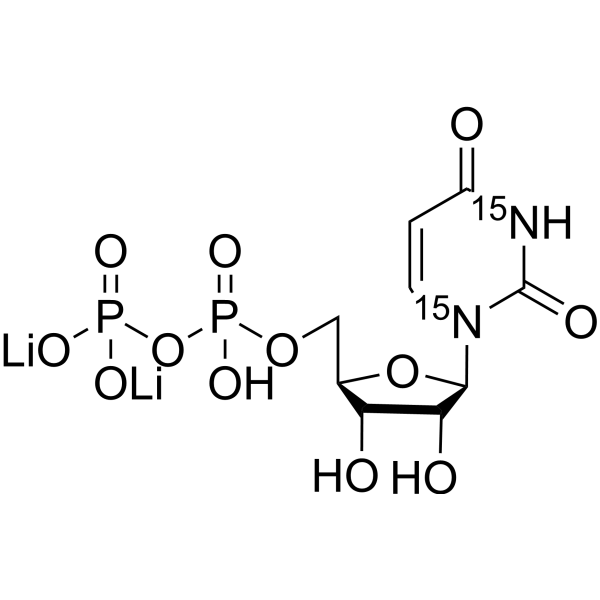 0 ImagesCat. No.: HY-113359AS3Synonyms: UDP-15N2 dilithiumUridine 5'-diphosphate-15N2 (UDP-15N2) dilithium is the 15N2-labeled Uridine 5'-diphosphate (HY-113359). Uridine-5'-diphosphate is an important nucleotide made of uracil, ribose, and a pyrophosphate group. Uridine-5'-diphosphate is a potent, selective human P2Y6 receptor native agonist (EC50 = 300 nM; pEC50 = 6.52). Uridine-5'-diphosphate disodium salt, an endogenous metabolite, catalyzes the glucuronidation of a wide array of substrates and is used in nucleic acid (RNA) biosynthesis.
-
PSB-1114 tetrasodium
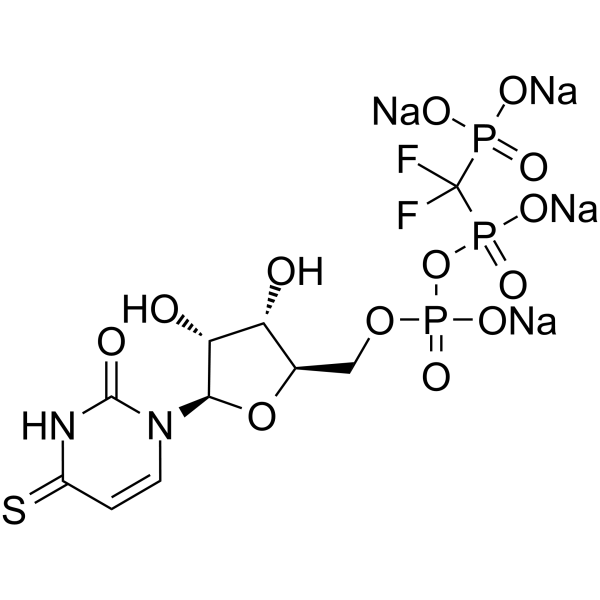 0 ImagesCat. No.: HY-110092CAS No.: 1657025-60-9PSB-1114 tetrasodium is a potent, enzymatically stable, and subtype-selective P2Y2 receptor agonist with an EC50 of 134 nM. PSB-1114 tetrasodium displays >50-fold selectivity versus the P2Y4 (EC50 of 9.3 μM) and P2Y6 (EC50 of 7.0 μM) receptors.
-
MRS2395
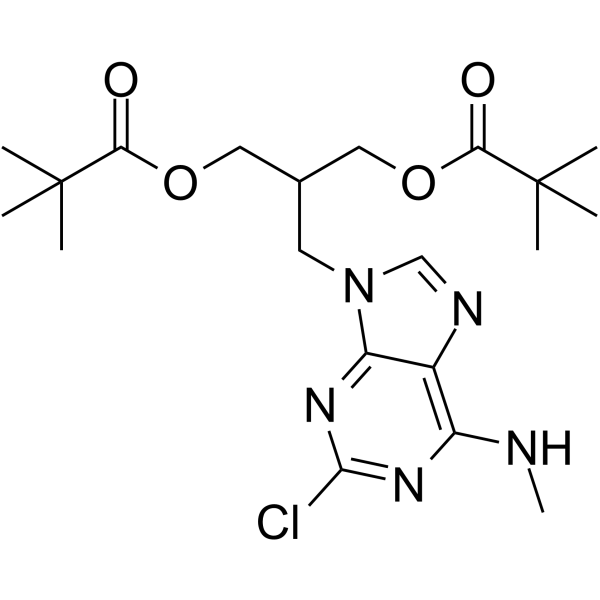 0 ImagesCat. No.: HY-136501CAS No.: 491611-55-3MRS2395, an dipivaloyl derivative, is a potent P2Y12 receptor antagonist. MRS2395 inhibits ADP-induced platelet activation with a Ki of 3.6 μM. MRS2395 inhibits cAMP induced by ADP in rat platelets in the presence of PGE1 with an IC50 of 7 µM. MRS2395 enhances platelet dense granule release in response to TRAP-6.
-
Antiplatelet agent 1
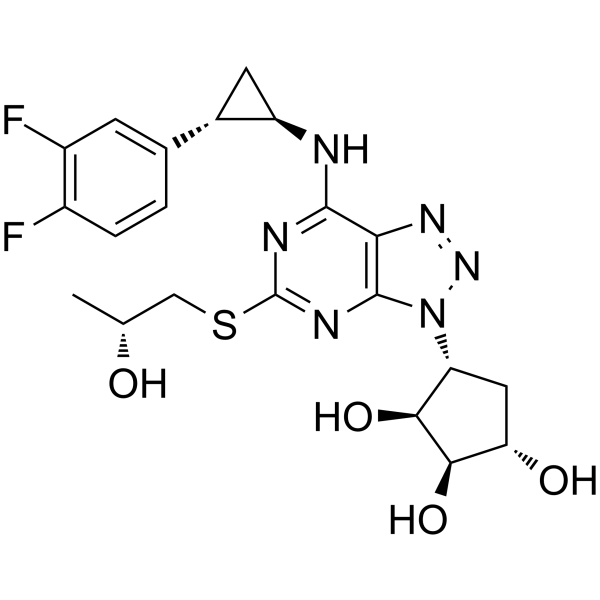 0 ImagesCat. No.: HY-146498CAS No.: 2493297-12-2Antiplatelet agent 1 (compound 7q) is a Ticagrelor analoguehas, possessing antiplatelet activity. Antiplatelet agent 1 can be used for researching platelet aggregation.
-
5-OMe-UDP
 0 ImagesCat. No.: HY-108663CAS No.: 1207530-98-0Synonyms: 5-Methoxyuridine 5'-trihydrogen diphosphate5-OMe-UDP (5-methoxyuridine 5'-trihydrogen diphosphate) is a P2Y6 receptor agonist (EC50=0.08 μM). 5-OMe-UDP activates the P2Y6 receptor by binding to it, which triggers signaling pathways within the cell. This activation can lead to an increase in intracellular calcium ion concentration, which in turn regulates cellular function. The methoxy groups of 5-OMe-UDP provide additional activity and selectivity, contributing to the binding of 5-OMe-UDP to the P2Y6 receptor. 5-OMe-UDP can be used to study diseases related to P2Y6 receptor function, such as diabetes, inflammatory bowel disease, Alzheimer's disease, etc.
-
Uridine-5'-O-3-thiotriphosphate
 0 ImagesCat. No.: HY-137603CAS No.: 79049-97-1Synonyms: UTPγSUridine-5'-O-(3-thiotriphosphate) (UTPγS), a stable analogue of Uridine triphosphate (UTP) (HY-107372), is a potent agonist of the P2Y2 and P2Y4 receptors with increased metabolic stability. Uridine-5'-O-(3-thiotriphosphate) stimulates inositol phosphate formation in human 1321N1 astrocytoma cells stably expressing the phospholipase C-coupled human P2U-purinoceptor (EC50 = 240 nM).
-
MRS2690
 0 ImagesMRS2690 is a selective P2Y14 receptor agonist. MRS2690 inhibits adenylyl cyclase activity, thereby reducing intracellular cAMP levels and mediating concentration-dependent vasoconstriction of porcine coronary arteries. MRS2690 induces intracellular calcium mobilization, activates P38 and stimulates [35S]GTPγS binding to RBL-2H3 cell membranes. MRS2690 enhances antigen (NP-BSA)-, C3a-induced β-hexosaminidase (β-Hex) release. MRS2690can be used for ischemic heart disease.
-
Clopidogrel-d3 hydrogen sulfate
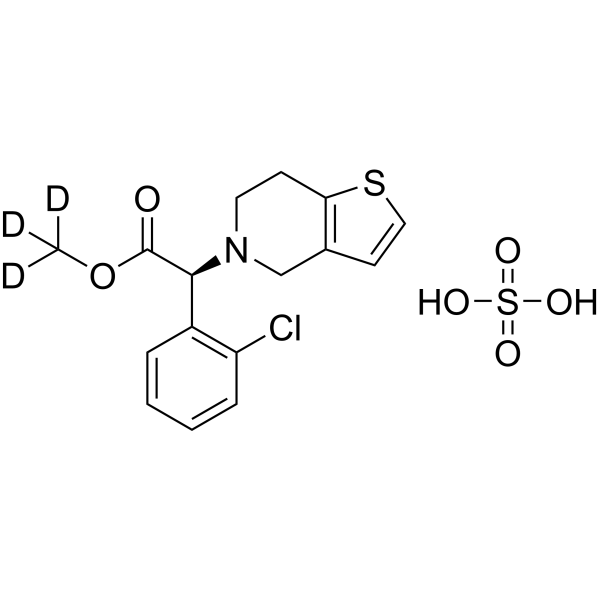 0 ImagesCat. No.: HY-17459SCAS No.: 1217643-68-9Synonyms: (S)-(+)-Clopidogrel bisulfate-d3; (S)-(+)-Clopidogrel-d3 hydrogen sulfateClopidogrel-d3 (hydrogen sulfate) is the deuterium labeled Clopidogrel hydrogen sulfate. Clopidogrel hydrogen sulfate is an antiplatelet agent to prevent blood clots. Clopidogrel hydrogen sulfate inhibits CYP2B6 and CYP2C19 with IC50s of 18.2 nM and 524 nM, respectively. Clopidogrel hydrogen sulfate is a potent antithrombotic agent that inhibits ADP-induced platelet aggregation.Clopidogrel hydrogen sulfate also is an orally active P2Y(12) inhibitor.




